B205

Advanced Studies on Energy Efficiency and Environmental Quality in the Built Environment [B-205]

Description

The course aims to analyze, design and evaluate the key technologies that contribute to improving the energy efficiency of buildings, districts and and urban built environments. In addition, the course aims to analyze the environmental quality parameters both indoor and in urban areas.
  • Energy needs in buildings, communities and cities. Modern challenges for the built environment
  • Indoor Environmental Quality in Buildings – Part 1: Thermal Comfort
  • Indoor Environmental Quality in Buildings – Part 2: Air Quality and Ventilation / Air Conditioning Systems
  • Indoor Environmental Quality in Buildings – Part 3: Visual comfort and lighting
  • Smart Buildings and Integrated Energy Design – Definitions and Examples
  • Buildings Certification LEED and BREEAM Standards
  • Zero Energy Communities and Intelligent Energy Systems
  • Energy planning in the urban environment and urban heat island phenomenon
  • Presentations of work progress
  • Smart cities and energy infrastructure – Part 1: Definitions
  • Smart cities and energy infrastructure – Part 2: Examples
  • Case Study Analysis
  • Presentations
More information in TUC eclass: http://www.eclass.tuc.gr/courses/MHPER193/

ENVE 511

Design of energy systems [ENVE 511]

Description

The course provides undergraduate students integrative expertise in the management and design of energy systems. The course is based on the knowledge of previous semester courses and enables students to develop further knowledge in the analysis and synthesis of energy systems.
The course introduces students to the energy needs of heating and cooling ventilation and lighting and then analyses innovative energy production and saving technologies.
Finally, the aim of the course is to understand the importance of the evaluation of the energy systems’ performance, the energy systems’ sizing and design as well as their successful integration in the built environment.
Upon successful completion of the course the student will be able to:
  • Understand the critical features of energy systems and their principles.
  • Become aware of the tools and techniques of energy systems analysis and how they are used to ensure management of energy projects.
  • Analyze and calculate the key elements of the various energy production and consumption.
More information in TUC eclass: https://www.eclass.tuc.gr/courses/MHPER267/
ENVE 545

Buildings’ Energy Efficiency [ENVE 545]

Description

The course introduces the students to the energy audits and energy efficiency in the building sector.
The course introduces students to methods, steps and energy audit equipment, and then analyses energy balance issues and heating/cooling loads.
Upon successful completion of the course the students will be able to:
  • Collect and analyse the necessary data for the energy audit of buildings.
  • Use appropriate energy balance calculation tools.
  • Evaluate the parameters that affect the buildings’ energy consumption.
  • Select analyse and evaluate energy efficiency scenarios.

More information in TUC eclass: http://www.eclass.tuc.gr/courses/MHPER204/

ENVE 335

Optimization of Environmental Systems [ENVE 335]

Description

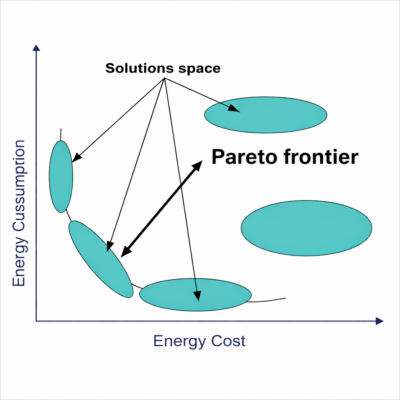
Introduction, Classification of the optimization models, Nonlinear optimization, Convex and Concave sets, Theorems of Mathematical Optimization, The Geometry of the Optimization Problem, Unconstrained Optimization Problems, Lagrange Multipliers, Linear Programming Problems, Simplex method, Nonlinear Programming Problems, Constrained Optimization, Dynamic Programming, applications of optimization methods to Water Resources Management, Design of Groundwater Systems, Optimal Groundwater remediation design, Optimal Saltwater Systems, and Optimal waste-water management systems, Sustainable water resources management. Advanced oprimisation systems. [ECTS=5]

More information in TUC eclass: http://www.eclass.tuc.gr/courses/MHPER216/

ENVE 332

Meteorology and Air Quality Models [ENVE 332]

Description

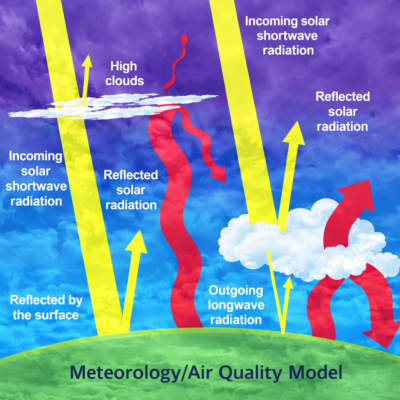
The course provides undergraduate students with a physical and quantitative background in meteorology and atmospheric science. The course analyses the meteorological parameters and their impact on the analysis of environmental processes and problems. Moreover, the course covers the topics of radiation and heat in the atmosphere, the study of the atmospheric boundary layer and atmospheric stability. It also refers to introductory concepts on climate and climate change. Finally, the aim of the course is to understand the importance of meteorological measurements’ assessment in energy and environmental problems.
Upon successful completion of this course the students will acquire new knowledge and specific skills on the following subjects:
  • Will be able to understand the critical features of meteorological systems, their connection to the energy and environmental systems and processes and the principles of atmospheric processes.
  • Will learn the methods and techniques for analyzing meteorological data for environmental engineering applications.
  • Will learn the methods and techniques for the analysis of atmospheric processes and climatic characteristics.
  • Can evaluate and assess atmospheric stability and the role of atmospheric boundary layer in engineering problems.

More information in TUC eclass: http://www.eclass.tuc.gr/courses/MHPER202/

environmental

Environmental Monitoring & Microclimate

Description

• Monitoring of microclimatic conditions
• Measurement of air and surface temperature
• Relative humidity assessment
• Wind speed monitoring
• Solar radiation / albedo measurements
• Lighting level assessment
• CO₂ concentration monitoring
• Long-term environmental data logging in outdoor and indoor environments
thermal

Thermal & Energy Assessment of Buildings and Materials

Description

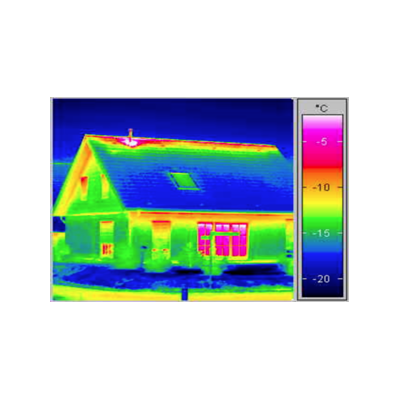
• Recording and mapping of surface temperatures
• Detection of thermal losses and thermal anomalies
• Measurement of heat flux and thermal transmittance (U-value)
• Evaluation of thermal conductivity and thermal behavior of building materials
• Support of building energy performance and thermal comfort studies

smart systems

Smart Systems, Automation & Laboratory Support

Description

• Integrated monitoring of environmental and energy parameters in smart buildings,
• Automation and real-time data acquisition,
• Communication between sensors and building management systems (BMS),
• Monitoring of human activity and physiological indicators (e.g., heart rate, physical activity, GPS),
• Support for applications in smart buildings, smart cities, and human-centered monitoring

laboratory

Laboratory Analysis & Material Characterization

Description

• Measurement of the optical properties of materials (reflectance, absorbance, transmittance),
• Evaluation of solar performance and albedo of materials,
• Simulation of environmental stress, UV radiation, and artificial aging,
• Precise electrical measurements and testing of sensors or thermoelectric devices,
• Preparation and support of sensitive laboratory analyses.